Soarce raises $5 million in a seed round closed last week. Collab Capital led the round, with participation from two undisclosed strategic investors in the advanced materials sector. The capital is already allocated — here is where it goes and why.
What We Built to Get Here
Soarce started with a straightforward materials problem. Industrial manufacturers — automotive suppliers, aerospace subcontractors, sporting goods producers — need composites that are lighter than glass fiber but cheaper than carbon fiber. That gap has existed for more than a decade. Nanofiber and nanocellulose composites can fill it, but nobody had figured out how to produce them at the volumes and price points that OEM supply chains require.
We spent 22 months answering that question inside our Atlanta pilot facility. By the end of 2024, we had a working production line for NF-400 nanofiber mats and NC-200 cellulose nanocrystal pellets, with throughput sufficient to supply qualification batches to three Tier 1 automotive suppliers. The seed round validates that the approach is commercially viable, not just technically interesting.
Why Collab Capital
Collab Capital backs founders who are underrepresented in the industries they are disrupting. Their $75M 2025 fund specifically targets companies where the founding team's perspective creates durable competitive advantage. For Soarce, that means a team with deep Southeast manufacturing networks, relationships with FSC-certified pulp mills in the Carolinas, and an understanding of what plant-floor engineers actually need from a materials supplier — not what analysts assume they need.
Their operational support has been concrete. Inside 60 days of term sheet, their network connected us to a second-tier extruder manufacturer in Georgia willing to co-develop custom compounding profiles for our CNC blends. That kind of introduction would have taken us 18 months cold-calling.
Capacity Expansion: The Production Line Numbers
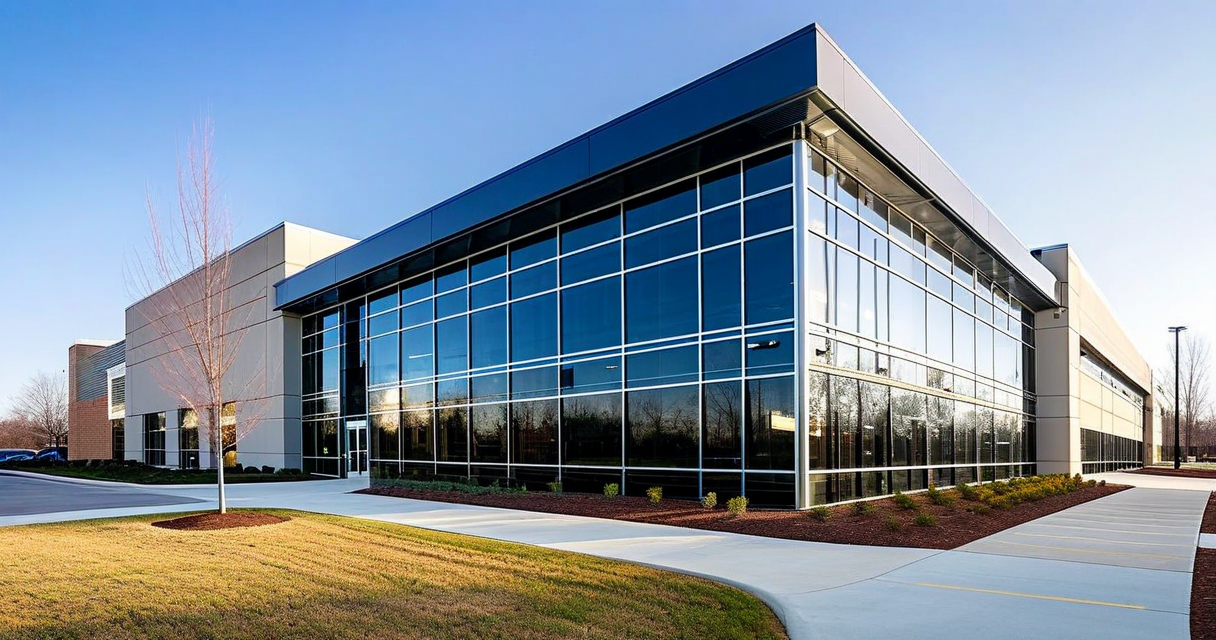
The facility in Atlanta currently runs a single 1.2-meter needleless electrospinning line. Throughput is approximately 120 square meters of nanofiber mat per hour at standard basis weight. That is enough for qualification testing but not for serial supply to an automotive customer running 50,000 parts per year.
Of the $5M, $2.8M goes toward a second electrospinning line with 2.4-meter collector width, expected online by Q3 2025. A further $600K goes toward a 65mm co-rotating twin-screw compounding line dedicated to CNC pellet production. At full utilization, those two additions bring total capacity to roughly 1,200 metric tons of composite material annually — enough to be a real supply option for mid-volume manufacturers.
The Raw Material Supply Chain
One question we get from potential customers is whether we can actually scale the feedstock. Dissolving-grade wood pulp — the starting material for cellulose nanocrystal production — is a real commodity market. We source from two FSC-certified mills in North and South Carolina. Both have supply agreements in place through 2027 with volume escalation clauses tied to our production milestones.
The electrospinning polymer feedstocks — primarily polyacrylonitrile and polyamide 6 — come from three domestic distributors. We do not rely on a single-source supplier for any primary input. That was a deliberate design choice after watching a competitor spend six months waiting for imported PAN during supply chain disruptions in 2023.
Qualification Status with Tier 1 Customers
We are currently in material qualification with three customers. One is a Tier 1 automotive supplier testing NC-200 as a glass fiber substitute in door panel substrate applications. One is an industrial filtration company evaluating NF-400 mats for liquid filtration elements. The third is in sporting goods — they are testing a nanofiber-reinforced thermoplastic for structural chassis components where weight is the primary constraint.
Qualification timelines vary. Automotive is typically 12-18 months for a new material in a structural application. Filtration is faster, typically 4-6 months for performance confirmation. We expect the filtration customer to be in commercial supply by Q4 2025. Automotive qualification will run into 2026.
What This Round Does Not Change
We are still a materials company, not a platform company. We make composite inputs that go into other people's products. The seed round does not change that focus — it deepens it. We are not adding a software layer, a marketplace, or a sustainability consulting arm. We are building capacity to produce better materials faster and at competitive cost.
We will continue publishing our test data openly. Full tensile modulus, elongation at break, and thermal decomposition onset data ship with every batch. If you are a manufacturer evaluating whether our composites fit your application, contact us for a sample kit and a material data sheet. The data should answer most of your questions before we get on a call.
What Comes After the Seed
The honest answer is that we need to prove commercial traction at scale before we can credibly raise a Series A. That means getting at least two customers into repeat purchase agreements — not just qualification batches. We expect to be in that position by mid-2026. Until then, we are focused on production, qualification, and keeping our existing customers well-supplied.
If you are working in automotive, filtration, aerospace, or consumer products and need a composite material that fits between glass fiber and carbon fiber on the performance-cost curve, reach out to Derek at [email protected]. We send sample kits with full test documentation within 10 business days.